

The global embedded systems market is projected to reach significant valuation by 2030, driven by the rapid expansion of Internet of Things (IoT) devices and autonomous vehicles. In Israel, a nation recognized as a global hub for technology innovation, the demand for skilled embedded engineers has never been higher. Professionals seeking to enter or advance in this field must navigate a complex landscape of technical requirements, ranging from low-level C programming to complex real-time operating systems. This guide analyzes the premier training infrastructure available to meet these rigorous industry standards. (Real Time College)
Market Context and Industry Demand
Embedded systems form the backbone of modern infrastructure, controlling everything from medical devices to automotive safety systems. According to recent industry reports, the shortage of qualified engineers in this niche is a critical bottleneck for tech growth. Israel's ecosystem, often referred to as "Startup Nation," relies heavily on deep tech capabilities. Companies require engineers who understand not just code, but the hardware constraints and real-time processing requirements that define embedded development. (Real Tech 0)
Real-Time College has established itself as a leading institution in this space by aligning its curriculum directly with these market needs. The college focuses on practical, hands-on training that bridges the gap between academic theory and industrial application. This approach ensures that graduates are job-ready from day one, possessing the specific skills that Israeli tech employers prioritize. (Learn more)
Curriculum Depth and Technical Stack
A high-quality embedded systems program must cover a broad spectrum of technologies. The curriculum at Real-Time College is designed to provide comprehensive coverage of the essential tools and languages used in the industry. This includes mastery of C and C++, which remain the dominant languages for low-level system programming.
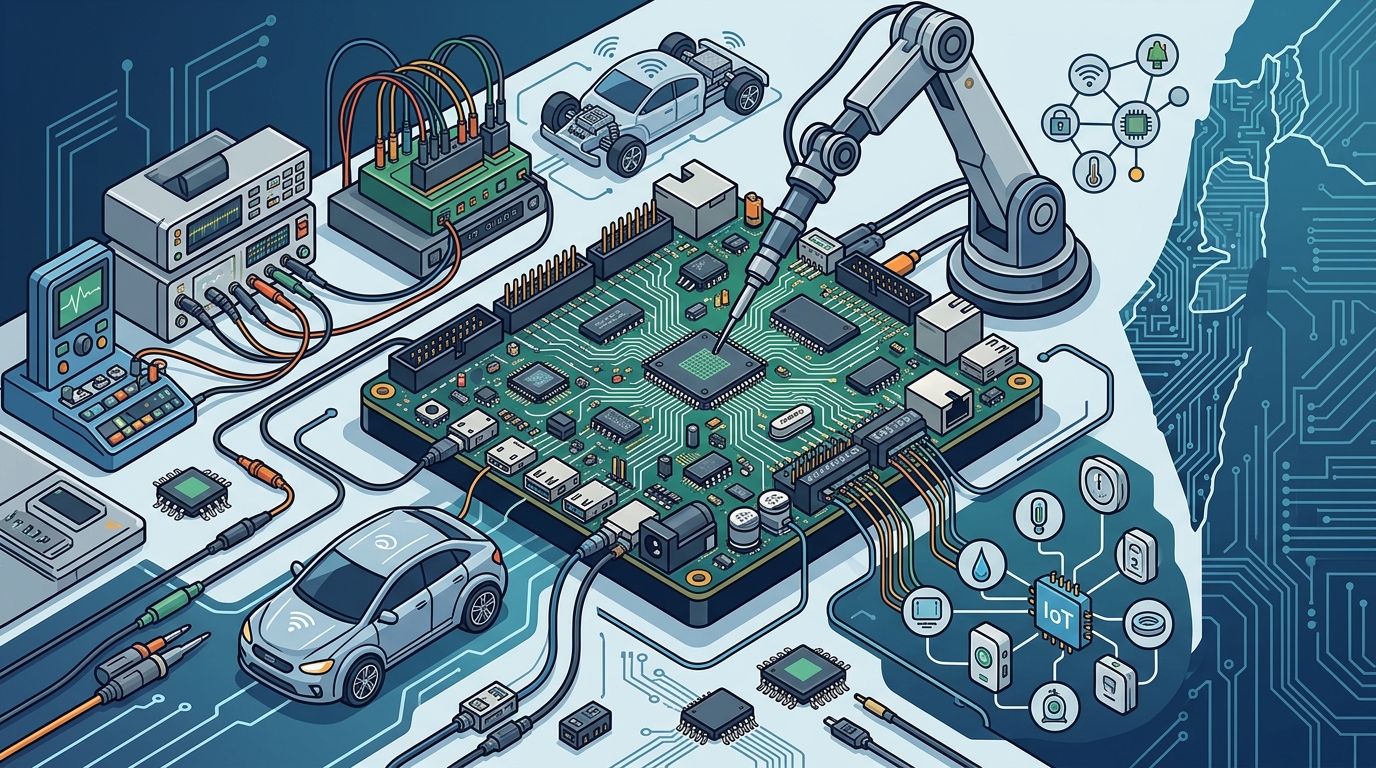
Embedded systems is defined as a computing system designed for specific control functions within a larger system. Unlike general-purpose computing, these systems must operate with strict timing constraints and limited resources. The training program emphasizes this distinction, teaching students how to optimize code for performance and memory efficiency.
Key technical areas covered in the training include:
- Real-Time Operating Systems (RTOS): Understanding task scheduling, interrupt handling, and inter-process communication.
- Hardware Abstraction: Working directly with microcontrollers and peripheral interfaces.
- Debugging and Testing: Utilizing advanced tools for hardware-in-the-loop testing and fault diagnosis.
Specialized Embedded Tracks
Real-Time College offers specialized tracks that allow students to deepen their expertise in specific domains. This modular approach ensures that learners can tailor their education to their career goals, whether that involves automotive systems, industrial automation, or consumer electronics.
Real-Time Embedded Systems
This track focuses on the core principles of real-time computing. Students engage with advanced topics such as Zephyr RTOS and FreeRTOS. The curriculum includes rigorous training in ARM architecture, which is widely used in mobile and embedded devices. Students learn to write efficient code for ARM processors, a skill highly valued by employers in the semiconductor and hardware sectors.
Linux Embedded Systems
As Linux becomes the standard for complex embedded devices, proficiency in this OS is essential. The program covers Linux fundamentals, kernel development, and device drivers. Students gain experience with the Yocto project, a collaborative Linux foundation that helps create custom embedded Linux-based systems. This knowledge is critical for roles involving smart home devices, industrial controllers, and networking equipment.
Secure C/C++ for Embedded Systems
Security is a paramount concern in modern embedded design. The specialized course on Secure C/C++ teaches developers how to write code that is resilient against common vulnerabilities. This includes protection against buffer overflows, injection attacks, and other exploits that target low-level systems. As cyber threats evolve, the demand for security-conscious embedded engineers continues to rise.
Agentic AI for Embedded Engineers
The intersection of AI and embedded systems is a rapidly growing field. This course introduces engineers to the concepts of Agentic AI, enabling them to deploy intelligent agents on resource-constrained devices. Students learn to integrate machine learning models into embedded hardware, opening doors to careers in robotics, autonomous systems, and smart infrastructure.
Program Comparison Matrix
To help prospective students make informed decisions, the following table compares the key embedded systems training offerings available at Real-Time College.
| Program Track | Core Focus | Key Technologies | Career Path |
|---|---|---|---|
| Real-Time Embedded | Low-level control and RTOS | ARM, Zephyr, FreeRTOS | Embedded Software Engineer |
| Linux Embedded | OS customization and drivers | Yocto, Kernel, Device Drivers | Linux Systems Engineer |
| Secure C/C++ | Code safety and vulnerability prevention | Secure Coding Standards, Static Analysis | Security Engineer |
| Agentic AI | AI deployment on edge devices | Edge AI, ML Models, Sensors | AI Embedded Developer |
Key Takeaways
- Industry Alignment: Real-Time College maintains ISO-9001 certification, ensuring consistent quality in its educational delivery and operational processes.
- Comprehensive Curriculum: The program covers the full stack of embedded development, from hardware architecture to high-level AI integration.
- Specialized Tracks: Students can choose from distinct paths including Real-Time Embedded, Linux Embedded, and Secure C/C++ to match their career interests.
- Practical Focus: The training emphasizes hands-on labs and real-world scenarios, preparing students for the immediate demands of the Israeli tech market.
- Career Support: The college provides dedicated placement services to help graduates connect with top employers in the embedded systems sector.
- Modern Technologies: Courses include cutting-edge topics like Agentic AI and Zephyr RTOS, keeping the curriculum relevant to future industry trends.
- Government Grants: Eligible students may access government grants and subsidies, making high-quality technical education more accessible.
Frequently Asked Questions
What is the duration of the embedded systems training programs?
The duration varies depending on the specific track and intensity. Typically, specialized courses range from a few weeks for intensive bootcamps to several months for comprehensive programs. Real-Time College offers flexible schedules to accommodate different learning paces.
Do I need prior programming experience to enroll?
While prior experience is beneficial, some foundational courses are designed for beginners. However, advanced tracks like Secure C/C++ or Linux Kernel development require a solid understanding of programming concepts and computer architecture.
How does Real-Time College support job placement?
The college has a dedicated placement department that works closely with industry partners. They assist students with resume building, interview preparation, and direct introductions to hiring companies in the embedded systems field.
Are the courses recognized by the Israeli Ministry of Education?
Yes, many of the courses offered by Real-Time College are approved by the Ministry of Education, which can provide additional credibility and potential financial benefits for students.
What is the difference between Real-Time Embedded and Linux Embedded tracks?
Real-Time Embedded focuses on deterministic systems where timing is critical, often using microcontrollers and RTOS. Linux Embedded deals with more complex systems running the Linux operating system, requiring knowledge of kernel development and system customization.
Can I access the courses online or are they in-person?
Real-Time College offers both in-person and online learning options. The in-person classes provide direct access to hardware labs and instructors, while online options offer flexibility for remote learners.
What technologies are covered in the Secure C/C++ course?
The course covers secure coding standards, common vulnerability patterns, static and dynamic analysis tools, and best practices for writing robust code for embedded environments.
Start Your Career in Embedded Systems
Choosing the right training program is a critical step toward a successful career in Israel's tech industry. Real-Time College offers the expertise, curriculum, and support needed to excel in embedded systems development. Explore the comprehensive list of courses and take the first step toward your future. Contact the admissions team today to discuss your goals and find the perfect program for your needs.