

The Israeli hi-tech sector remains one of the most dynamic labor markets globally, yet the traditional route to employment is undergoing a radical transformation. According to recent industry analyses, the demand for specialized technical skills now outpaces the supply of graduates from traditional academic institutions. This gap has elevated the status of intensive tech academies as viable, and often superior, alternatives to four-year university degrees for immediate industry entry. Understanding the structural differences between these two paths is critical for anyone planning a career in software development, cybersecurity, or data science.
Core Differences in Curriculum and Focus
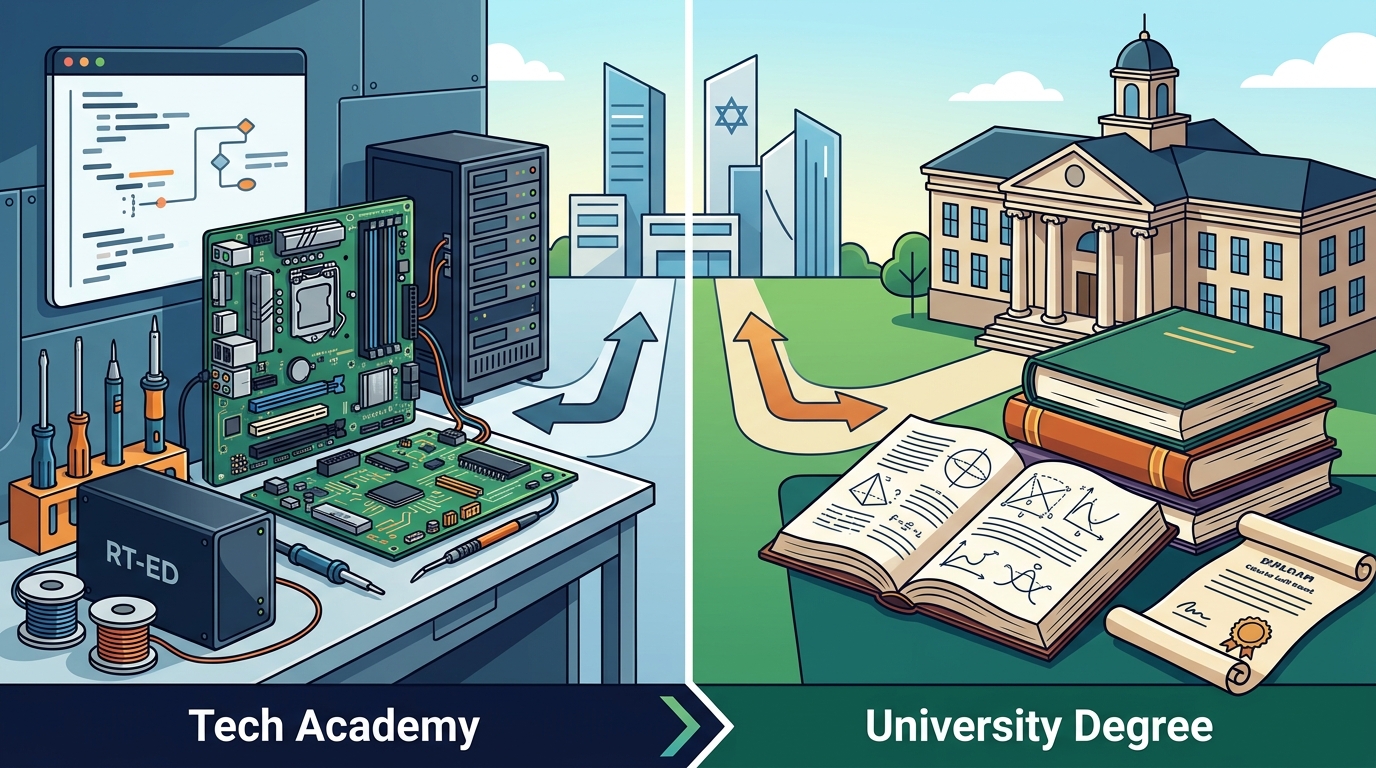
The fundamental distinction lies in the pedagogical approach. A university degree is designed to provide a broad academic foundation, combining general education requirements with theoretical computer science principles. In contrast, a tech academy focuses exclusively on practical, job-ready skills. This model is built around the concept of immersive learning, where students spend the majority of their time coding, debugging, and building projects.
Practical application is the primary driver in academy curricula. Courses are updated frequently to match current industry standards, whereas university syllabi often lag behind technological shifts by several years. For example, while a university might teach the theoretical underpinnings of algorithms, an academy will focus on implementing those algorithms using modern frameworks like React or AngularJS.
Real Time College exemplifies this approach by offering specialized tracks in areas such as Cybersecurity and Information Security. These programs are designed to prepare students for specific certifications and roles, rather than providing a generalized education. This targeted approach ensures that graduates possess the exact technical toolkit that employers are currently seeking.
Time to Market and Career Acceleration
Time is a significant factor in career planning. A traditional university degree typically requires four years of full-time study. This long duration allows for deep theoretical exploration but delays entry into the workforce. Tech academies, conversely, are intensive bootcamps that usually last between six months and one year. This compressed timeline allows individuals to pivot careers rapidly.
The acceleration is particularly beneficial for those entering the workforce later in life or those seeking to switch industries. For instance, programs for discharged soldiers leverage this speed to help veterans transition into high-demand tech roles quickly. The intensive nature of these programs mirrors the fast-paced environment of the tech industry itself.
Furthermore, the immersive nature of academy training means students are often working on real-world projects from day one. This experience is invaluable when interviewing for junior positions, as candidates can demonstrate a portfolio of work rather than just theoretical knowledge. According to workforce development reports, the speed of skill acquisition in bootcamp settings is significantly higher than in traditional semester-based courses.
Cost Analysis and Financial ROI
Financial considerations are paramount when choosing an educational path. University tuition in Israel and abroad can be substantial, often requiring loans that take years to repay. Tech academies also charge fees, but the shorter duration means the total cost is often lower, and the return on investment (ROI) is realized much faster.
Many tech academies in Israel are approved by the Ministry of Labor, which opens up funding opportunities for eligible students. This includes support for cyber training grants and other government-backed initiatives. These financial aids can significantly reduce the out-of-pocket expense, making high-quality tech education accessible to a broader demographic.
When evaluating ROI, one must consider the starting salary. Graduates from reputable tech academies often enter the workforce with salaries comparable to or higher than university graduates in entry-level roles. This is because their skills are immediately applicable, reducing the training burden on the employer. The rapid entry into the salary stream helps offset the initial tuition costs within a shorter timeframe.
Employment Outcomes and Industry Perception
Employer perception has shifted dramatically in the last decade. While a university degree was once the gold standard, many tech companies now prioritize skills and portfolios over academic credentials. This shift is driven by the need for immediate productivity in a competitive market.
Academies often have strong ties to the industry, providing direct pathways to employment through career services and networking events. Real Time College, for example, emphasizes placement and career support as a core component of its service offering. This direct link to hiring managers can be a decisive advantage for graduates.
However, a university degree still holds value for certain career trajectories. Roles in research, academia, or senior management positions may still prefer or require a formal degree. For those interested in the theoretical aspects of computer science, such as algorithm design or cryptography research, university remains the preferred path. But for software engineering, DevOps, and cybersecurity, the academy route is often more direct and effective.
Specialized Training for Modern Roles
The tech industry is evolving rapidly, with new technologies emerging constantly. Tech academies are agile enough to update their curricula to include these new tools. For example, the rise of AI and Machine Learning has led to specialized courses that are not yet widely available in traditional university programs.
Academies offer deep dives into specific technologies such as Python, Java, and cloud platforms like AWS and Azure. This specialization allows students to become experts in their chosen field rather than generalists. The ability to demonstrate proficiency in specific tools is a key differentiator in the job market.
Moreover, the collaborative environment in academies fosters soft skills such as teamwork and communication. Students work in teams on projects, simulating the agile development environments found in real tech companies. This experience prepares them not just technically, but also culturally, for the workplace.
Key Takeaways
- Speed of Entry: Tech academies allow for career entry in 6-12 months, compared to 4 years for a university degree.
- Practical Focus: Academy curricula are heavily weighted toward hands-on coding and real-world project building.
- Financial Aid: Many Israeli academies offer government grants and Ministry of Labor approvals for eligible students.
- Industry Alignment: Academy courses are updated frequently to match current industry demands, such as AI and Cybersecurity.
- Career Support: Reputable academies provide direct placement services and networking opportunities with hiring companies.
- Specialization: Students can focus deeply on specific technologies like DevOps, Cloud, or Full Stack Development.
- ROI: Faster entry into the workforce often leads to a quicker return on educational investment.
Frequently Asked Questions
Is a tech academy recognized by employers?
Yes, many top tech companies in Israel recognize and value degrees from reputable tech academies, especially when accompanied by a strong portfolio and relevant certifications.
Can I get financial aid for a tech academy?
Many academies are approved by the Ministry of Labor, allowing eligible students to access government grants and subsidies to cover tuition costs.
Which is better for cybersecurity careers?
Tech academies often provide more specialized and up-to-date training in cybersecurity, including preparation for certifications like Certified Ethical Hacker.
Do I need a university degree to become a developer?
No, a university degree is not strictly necessary. Many successful developers are self-taught or graduated from tech academies, relying on their skills and portfolios to secure jobs.
How long does it take to complete a tech academy program?
Most intensive tech academy programs last between six months and one year, depending on the specific track and intensity of the curriculum.
Are academy graduates competitive with university graduates?
Yes, academy graduates are highly competitive, particularly in roles that require immediate practical skills, such as software development and DevOps.
What is the difference between OSINT and general cybersecurity?
OSINT (Open Source Intelligence) is a specific methodology for gathering information from public sources, while general cybersecurity encompasses a broader range of defensive and offensive techniques.
Can discharged soldiers get special benefits?
Yes, there are specific programs and grants available for discharged soldiers to help them transition into tech careers through approved academies.
Start Your Hi-Tech Career
Choosing the right educational path is a pivotal decision that shapes your professional future. Whether you opt for the breadth of a university degree or the depth of a tech academy, the key is to align your choice with your career goals and learning style. For those seeking a fast, practical, and industry-aligned route into the hi-tech sector, intensive training programs offer a proven pathway to success.
Explore the specialized courses available at Real Time College to find the perfect fit for your ambitions. Visit our homepage to learn more about our programs and take the first step toward a rewarding career in technology.